Three quotations land on your desk for the same 800 m² venue. The renderings look alike. The prices differ by a wide margin. One supplier lists installation, another says "support available," and the third doesn't mention freight at all. Which one is actually cheaper?
Choosing an indoor playground manufacturer for a Thailand project is rarely a price comparison. It's an assessment of whether a supplier can carry a project from site data to design, production, export, installation, and years of use, with each handoff clearly owned. The nine checks below follow that sequence: how well the supplier understands your project, whether the design can be built, how quality is controlled, what safety documentation exists, what the quote actually covers, how shipping and import work, whether the site is ready, who installs and hands over, and what happens after opening.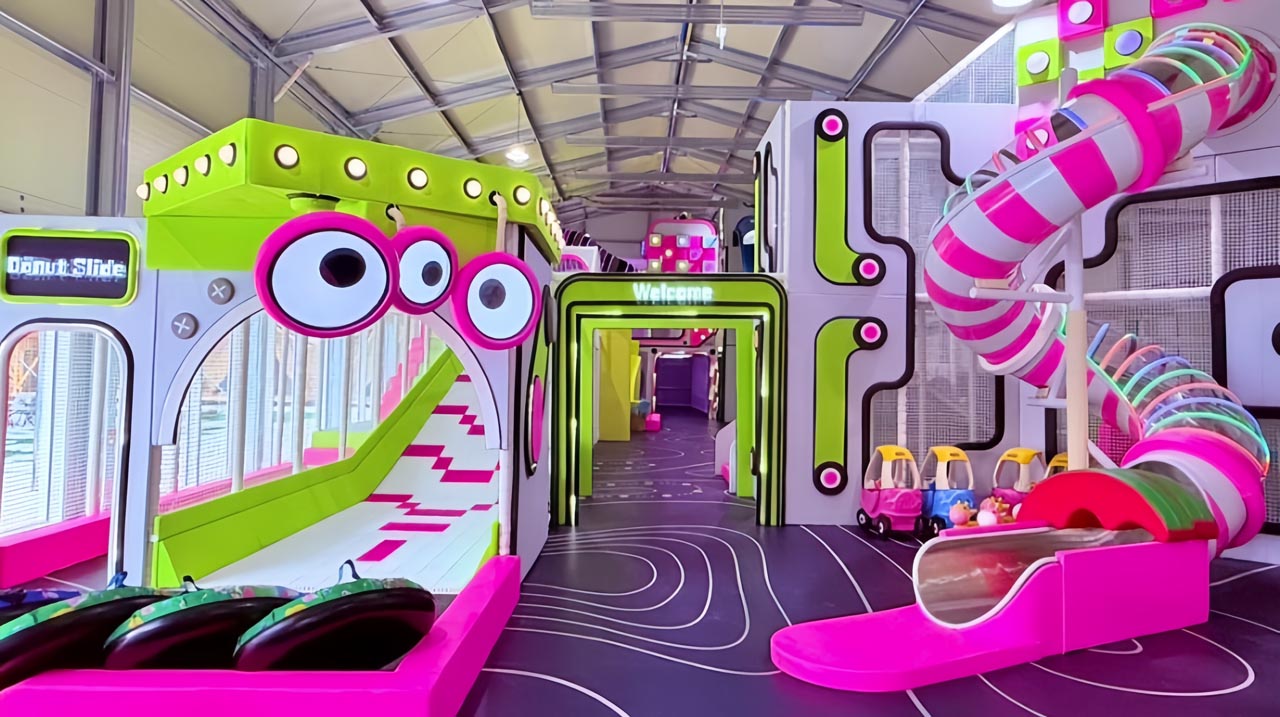
A supplier who sends a price list within an hour of your first message is selling items. A supplier who asks questions first is starting to plan a project.
Before proposing equipment, a capable manufacturer needs to know the intended use (standalone indoor playground, mall unit, hotel kids' club, or full family entertainment center), target age groups, floor area, clear height, circulation, budget range, operating model, and target opening date. Without these, any layout is a guess, and guesses surface later as clashes with columns, sprinkler lines, or ceiling limits.
Ask three things early:
The third question is the most revealing. A good answer lists assumptions (ceiling height, floor condition, who handles unloading). A weak answer is "no assumptions, everything included."
A rendering shows how a venue could look. It doesn't prove it can be built, installed, supervised, and maintained in your actual building.
A buildable design moves through stages: concept, 2D functional layout (zones and movement paths), equipment selection, 3D design, engineering breakdown, and installation drawings. Review each deliverable against real constraints:
Ask what you'll receive before production begins. Whatever the supplier, final measurements, engineering review, and signed drawings should come before production release, because changes after cutting and welding are expensive and slow.
A large factory or polished showroom doesn't guarantee quality. What matters is whether the supplier can show a controlled process.
Ask for evidence on:
Distinguish two kinds of evidence. A management-system certificate, such as ISO 9001, speaks to the company's processes in general. It doesn't show that your batch of equipment was made to your specification. Request inspection records or photos tied to your own order, and consider a factory visit or live video walkthrough before signing.
"Certified" can mean many things. A useful question is: certified to what, for which product, by whom, and does it apply here?
Standards cover different ground. ASTM F1918, for example, is a safety performance specification for soft contained play equipment. Its scope covers users from roughly 2 to 12 years old, and excludes public playground equipment, amusement rides, and toys, among other categories (ASTM F1918). That makes it relevant to some indoor attractions and irrelevant to others. EN standards have their own scopes. Check each against the specific attraction instead of accepting a general claim of compliance.
Just as important, no single certificate settles everything in Thailand. Equipment standards, product test reports, factory management certification, building requirements, fire-safety rules, and local operating approvals are separate matters. Whether any additional Thai requirement applies to your equipment or venue is something to confirm with the relevant Thai authority or a qualified local consultant. Don't assume it from a foreign certificate.
Documents worth requesting, then reviewing with local professionals:
Two quotations of similar size can describe different projects. One may include engineering and installation supervision; the other may stop at the factory gate. Ask each supplier to fill in the same table, with every line marked included, excluded, or the buyer's responsibility, in writing.
|
Cost area |
Confirm in writing |
Frequent gap |
|
Design and engineering |
Which drawings, how many revisions, who signs off |
Revisions charged separately |
|
Equipment and material specifications |
Itemized list with materials and dimensions |
"Standard materials" left undefined |
|
Packaging and export preparation |
Export packing, labeling, packing list |
Wooden crate or fumigation costs omitted |
|
International freight |
Shipping term, port of loading and discharge |
Quote ends at a Chinese port |
|
Customs clearance and import costs |
Who acts as importer, who pays duties and taxes |
Assumed "included" without a line item |
|
Local delivery and unloading |
Port to site, crane or forklift, unloading labor |
Left to the buyer without warning |
|
Installation labor and supervision |
Own team, supervisor only, or local crew |
Travel, accommodation, or local labor excluded |
|
Site preparation and local contractors |
Flooring, wall anchoring, electrical, fire systems |
Assumed to be the supplier's job |
|
Inspection, handover, documentation |
Acceptance procedure, records provided |
No defined handover |
|
Training, spare parts, warranty, support |
Duration, coverage, exclusions, spares |
Warranty start date unclear |
To compare like for like, add any excluded item as a separate estimated cost, obtained from local quotes rather than guessed. A hypothetical example: if Supplier A includes installation supervision and Supplier B doesn't, B's lower figure isn't a saving until you've priced that supervision yourself.
The manufacturer exports the goods. A freight forwarder moves them. Someone in Thailand acts as importer and files the customs declaration, often through a customs broker. The contract and the agreed shipping terms decide who does what. Don't assume the manufacturer handles every step.
Official Thai guidance indicates that traders must check permission requirements for their goods before proceeding, and importers must register with the Customs Department. Read the official procedure for sea cargo on the Thailand MICE One Stop Service customs page and confirm current rules with a licensed broker.
Settle these items in writing:
Don't accept a supplier's stated duty rate, product classification code, or clearance time without verification by a Thai customs broker. Those depend on the product, the declaration, and current regulations.
Equipment can arrive on schedule and sit in storage because the venue isn't ready. Walk through readiness before production is released:
Division of responsibility matters. The manufacturer should confirm what its equipment needs: dimensions, anchoring requirements, clearances. The landlord, architect, engineer, or local contractor must confirm the building: structural capacity, services, fire systems. Local authorities decide what permits or inspections apply. If the supplier can't tell you which of these fall to you, that's a gap to close before signing.
"Installation included" can mean three different things: the supplier's own technicians assemble everything, the supplier sends a supervisor who directs local labor, or local contractors work from drawings with remote guidance. Each has different cost, risk, and coordination needs.
Ask for written answers on:
After-sales terms are easiest to negotiate before the contract is signed and hardest to rely on a year later. Pin down:
Any response time should come from a written policy. Remote guidance helps with many issues, but it can't replace a part or an on-site repair. 
Send these to every shortlisted manufacturer and compare the written answers.
A reliable manufacturer makes project scope, technical requirements, responsibilities, and support arrangements clear before production starts. If a supplier is vague on any of the nine areas above, treat the vagueness as information.
Luckyplay provides turnkey indoor playground and FEC solutions, covering design, manufacturing, installation, and after-sales support. Its published Thailand project, a resort kids' club in Phuket, is a themed 512 m² play zone and one reference for how it works with a venue owner.
Planning an indoor playground in Thailand? Share your site plan, space requirements, and project objectives with Luckyplay to discuss the design approach and delivery scope for your project. Useful details include project location, approximate floor area and ceiling height, site plan or architectural drawings if available, intended age groups and venue type, and current project stage and target opening period.
How do I choose an indoor playground manufacturer for a project in Thailand?
Compare suppliers on the whole delivery chain rather than equipment price: project understanding, buildable design, quality control, relevant safety documentation, quotation scope, shipping and import responsibilities, installation, and after-sales terms. Ask for written answers and verifiable references.
What should an indoor playground quotation include?
It should itemize equipment and materials, design and engineering, packing, freight, customs and import costs, local delivery, installation, inspection, and warranty. Where an item is excluded or left to you, it should say so explicitly.
What documents should I check before importing playground equipment into Thailand?
Typically a commercial invoice, packing list, and transport documents, plus any product documentation or permits that apply to your equipment. Requirements depend on product classification and current regulations, so confirm with Thai Customs or a licensed customs broker.
Who is responsible for indoor playground installation in Thailand?
It depends on the contract. The manufacturer may send an installation team, supervise local labor, or provide drawings for a local contractor. Site preparation, building services, and local approvals usually sit with the owner or local contractors.
How can I compare manufacturers beyond equipment price?
Put every quotation into the same scope table, mark inclusions and exclusions, and price missing items locally. Then compare documentation, quality records, installation model, and support terms.
What after-sales support should I confirm before signing a contract?
Warranty start date, duration, and exclusions; spare-parts ordering and freight responsibility; fault-reporting channels; maintenance instructions; and whether on-site service is included. Treat response-time claims as binding only if they're in writing.


